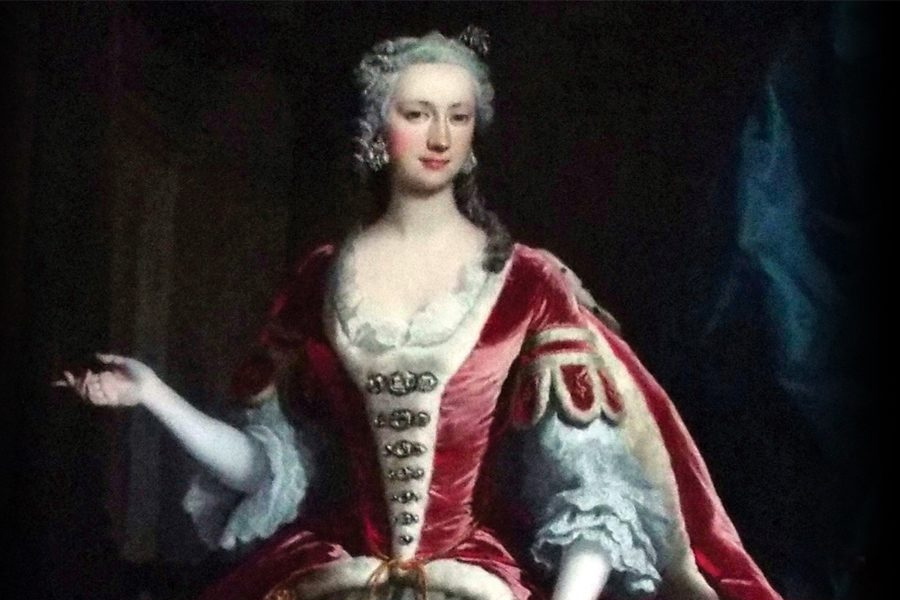
The Infancy of Shakespeare Quiney
When I look at the surviving record of Shakespeare Quiney, I am struck by how much history can be contained in only a few lines of a parish register. Shakespeare Quiney was baptised on 23 November 1616 at Holy Trinity Church in Stratford upon Avon and was buried at the same church on 8 May 1617. His entire life appears to have lasted only about five or six months.
His baptismal entry identified him as “Shaksper fillius Thomas Quyny gent.”, meaning Shakespeare, son of Thomas Quiney, gentleman. The entry is brief, but it establishes one of the most significant facts about his identity. He was the eldest son of Judith Shakespeare Quiney and Thomas Quiney and the maternal grandson of William Shakespeare and Anne Hathaway.
Shakespeare Quiney was born into a family whose name already carried considerable weight in Stratford. His maternal grandfather had died only months before his baptism. William Shakespeare died in April 1616, and the infant grandson born later that year was named Shakespeare in his memory.
His life was exceptionally short, yet his place in the family tree gives him historical importance. He was the first of three sons born to Judith and Thomas, and none of the three survived to adulthood. Through Judith, Shakespeare Quiney therefore became part of the final generation of Shakespeare descendants connected directly to William Shakespeare’s younger daughter.
The Parents of Shakespeare Quiney
Shakespeare Quiney’s mother was Judith Shakespeare, the younger daughter of William Shakespeare and Anne Hathaway. She was baptised on 2 February 1585 and was the fraternal twin of Hamnet Shakespeare.
Judith married Thomas Quiney on 10 February 1616 at Holy Trinity Church. She was about 31 years old, while Thomas was about 27. Their marriage took place during a period when weddings were restricted by church regulations because it was Lent. The couple had not obtained the required special licence, and the marriage consequently became entangled in ecclesiastical proceedings.
Judith’s husband, Thomas Quiney, was a Stratford vintner and tobacconist. He was the son of Richard Quiney and Elizabeth Quiney and belonged to a family with established commercial and civic connections in Stratford.
I find the circumstances surrounding Judith and Thomas particularly revealing because their marriage began under an unusual cloud of controversy. Their difficulties did not prevent them from establishing a household together, however. They remained married for decades and raised three sons, although none survived long enough to continue the family.
Judith Shakespeare and Her Ecclesiastical Troubles
During her father’s dying months, Judith’s marriage to Thomas Quiney caused an ecclesiastical conflict. The wedding timing was the issue.
Except with special permission, Lent marriage was prohibited by church law. Judith and Thomas married on February 10, 1616, shortly after the restricted season began. Their bishop’s court citation followed.
The surviving record is incomplete, especially about Judith’s sentencing. Thomas and the spouse were disciplined for failing to attend when summoned.
Thomas was also accused of having intercourse with Margaret Wheeler before marrying Judith, complicating matters. In March 1616, Wheeler and her infant died during childbirth. Thomas told the local church court about the relationship.
Original punishment included public penance, but it was lowered. He donated five shillings to the impoverished and confessed to a pastor instead of facing public disgrace.
Shakespeare’s final arrangements for Judith may have been affected by these events. Shakespeare altered his will in March 1616, shortly before his death, to strengthen his daughter’s fortune. One of the best illustrations of how family events affected property arrangements in early seventeenth-century England.
Shakespeare Quiney’s Famous Maternal Grandfather
The most famous person in Shakespeare Quiney’s immediate family was undoubtedly William Shakespeare.
William Shakespeare was baptised on 26 April 1564 and buried on 25 April 1616. By the time Shakespeare Quiney was baptised in November 1616, his grandfather had already been dead for approximately seven months.
William Shakespeare and Anne Hathaway had three children who survived infancy: Susanna, Hamnet, and Judith. Hamnet died at only 11 years of age in 1596. Susanna lived to adulthood and had one child, Elizabeth Hall. Judith survived her two siblings and eventually became the mother of three sons.
This makes Shakespeare Quiney’s position especially poignant. He belonged to a family tree whose branches repeatedly disappeared through early deaths.
Anne Hathaway, Shakespeare Quiney’s maternal grandmother, was born around 1556 and survived her husband by several years. She was buried on 6 August 1623. Her life therefore overlapped with that of her grandson only briefly.
The Quiney Family Connection
The paternal side of Shakespeare Quiney’s family was also deeply connected to Stratford life.
His grandfather Richard Quiney was a mercer, alderman, and bailiff of Stratford. He died in 1602 while serving in civic office. Richard Quiney is especially memorable in Shakespearean history because he wrote the only surviving letter addressed directly to William Shakespeare. Written on 25 October 1598, the letter concerned financial assistance and a request connected with a £30 loan.
Through Richard Quiney, Shakespeare Quiney inherited a family connection that was commercial, civic, and local rather than literary. The Quineys were established members of Stratford society, and their relationship with the Shakespeare family extended beyond the marriage between Judith and Thomas.
His grandmother Elizabeth Quiney, née Phillips, completed this paternal family connection, although much less personal information survives about her.
The Brothers of Shakespeare Quiney
Shakespeare Quiney did not grow up with his younger brothers because they were born after his death.
Richard Quiney was baptised on 9 February 1618, almost nine months after Shakespeare Quiney’s burial. He lived much longer than his older brother and was buried on 6 February 1639 at approximately 21 years of age.
Thomas Quiney, the third son, was baptised on 23 January 1620. He was buried only five days after his nineteenth birthday, on 28 January 1639.
The deaths of Richard and Thomas occurred within days of one another. Their exact causes are uncertain, although illness or plague has sometimes been considered in connection with the timing.
The three brothers therefore formed a tragic sequence. Shakespeare Quiney died in infancy, Richard reached about 21, and Thomas reached about 19. None married and none left descendants.
Susanna Shakespeare and the Other Branch of the Family
Shakespeare Quiney’s maternal aunt was Susanna Shakespeare, the elder daughter of William Shakespeare and Anne Hathaway.
Susanna married physician John Hall. Their daughter, Elizabeth Hall, was Shakespeare Quiney’s first cousin. Elizabeth was born in 1608 and eventually married Thomas Nash and later John Barnard.
Elizabeth’s life represents another important branch of Shakespeare’s family. She survived until 1670 but left no surviving children. When Judith’s three sons also died without descendants, the direct legitimate line descending from William Shakespeare came to an end.
This makes Shakespeare Quiney’s short existence more significant than it might initially appear. He was not merely a forgotten infant in a parish register. He belonged to the final generation of descendants who could have extended Shakespeare’s family line.
The Meaning of His Name
The name Shakespeare Quiney is itself a small historical memorial.
He was named after his maternal grandfather, William Shakespeare, who had died earlier in 1616. At a time when family names carried enormous emotional and social meaning, giving the child the name Shakespeare connected him directly with his famous grandfather.
The name also preserved the Shakespeare identity within Judith’s branch of the family. Although the surname Quiney came from his father, his given name kept Shakespeare alive in the next generation.
I find this especially moving because the child himself never had the opportunity to create a reputation. His name became the principal surviving sign of his existence.
Life in Stratford upon Avon
Shakespeare Quiney’s world was Stratford upon Avon, a community where family, commerce, religion, and civic life were closely intertwined.
His father worked as a vintner and tobacconist, while his wider Quiney family had commercial and civic responsibilities. His mother was the daughter of one of England’s most famous playwrights, although that fame had not yet developed into the modern cultural phenomenon associated with Shakespeare.
The family’s property included a house known as The Cage. Judith also benefited from inheritance arrangements established by her father. William Shakespeare had intended to provide her with £300, but the conditions surrounding the inheritance were designed to protect her interests and restrict Thomas Quiney’s control over the money.
For Shakespeare Quiney, however, none of these financial arrangements could create an independent life. He was too young to possess a career, personal fortune, or public achievements.
A Life Preserved in a Few Records
History’s Shakespeare Quiney seemed ghostly. I know his baptism, parents, grandparents, brothers, and burial, but not his personality.
No portrait, personal letter, diary entry, or description of his boyhood beyond his birth and death exist.
One contemporary financial document shows a little payment for ringing the huge bell after Thomas Quiney’s child died. Even a small entry shows the community mourning an infant.
His funeral on 8 May 1617 ended a brief life.
The Final Generation of Shakespeare’s Direct Family
Shakespeare Quiney’s story becomes most significant when viewed alongside the lives of his relatives.
William Shakespeare died in 1616. His son Hamnet had already died in 1596. His daughter Susanna lived until 1649, but her only child Elizabeth left no surviving descendants. Judith lived until 1662 and outlived all three of her sons.
Shakespeare Quiney was therefore part of a final family generation. Had he survived, married, and had children, the Shakespeare surname and bloodline might have continued through Judith’s descendants. Instead, his death was followed by the later deaths of Richard and Thomas Quiney without surviving heirs.
The family tree narrowed branch by branch until no direct legitimate descendants remained.
The Family Timeline of Shakespeare Quiney
| Date | Family event |
|---|---|
| 26 April 1564 | William Shakespeare is baptised |
| 2 February 1585 | Judith Shakespeare is baptised |
| 2 February 1585 | Hamnet Shakespeare, Judith’s twin, is baptised |
| 26 February 1589 | Thomas Quiney is baptised |
| 11 August 1596 | Hamnet Shakespeare is buried |
| 25 October 1598 | Richard Quiney writes his famous letter to William Shakespeare |
| 1602 | Richard Quiney dies |
| 1608 | Elizabeth Hall, Shakespeare Quiney’s cousin, is born |
| 10 February 1616 | Judith Shakespeare marries Thomas Quiney |
| March 1616 | Thomas Quiney faces ecclesiastical proceedings |
| April 1616 | William Shakespeare dies |
| 23 November 1616 | Shakespeare Quiney is baptised |
| 8 May 1617 | Shakespeare Quiney is buried |
| 9 February 1618 | Richard Quiney is baptised |
| 23 January 1620 | Thomas Quiney is baptised |
| 6 February 1639 | Richard Quiney is buried |
| 28 January 1639 | Thomas Quiney is buried |
| 6 August 1623 | Anne Hathaway is buried |
| 9 February 1662 | Judith Quiney is buried |
| 1670 | Elizabeth Barnard dies without surviving issue |
Frequently Asked Questions
Who was Shakespeare Quiney?
Shakespeare Quiney was the eldest son of Judith Shakespeare Quiney and Thomas Quiney. He was also a grandson of William Shakespeare and Anne Hathaway.
When was Shakespeare Quiney born?
The surviving record gives his baptism date as 23 November 1616. His exact birth date is not known.
When did Shakespeare Quiney die?
Shakespeare Quiney was buried on 8 May 1617 at Holy Trinity Church in Stratford upon Avon. He was approximately five or six months old.
Why was Shakespeare Quiney given the name Shakespeare?
He was named in honour of his maternal grandfather, William Shakespeare, who had died in April 1616, only months before the child’s baptism.
Who were Shakespeare Quiney’s parents?
His parents were Judith Shakespeare, William Shakespeare’s younger daughter, and Thomas Quiney, a Stratford vintner and tobacconist.
Did Shakespeare Quiney have siblings?
Yes. He had two younger brothers, Richard Quiney and Thomas Quiney. Both survived infancy but died as young adults in 1639.
Did Shakespeare Quiney have children?
No. He died in infancy and therefore never married or had children.
Was Shakespeare Quiney a descendant of William Shakespeare?
Yes. He was William Shakespeare’s grandson through his daughter Judith.
What happened to Judith Shakespeare after her son’s death?
Judith survived Shakespeare Quiney by more than four decades. She later lost her other two sons and was buried in 1662.
Did Shakespeare Quiney’s family continue the Shakespeare line?
No. Shakespeare Quiney and both of his brothers died without descendants. His cousin Elizabeth Hall, the daughter of Susanna Shakespeare, also died without surviving issue, bringing the direct legitimate Shakespeare line to an end.